


 Jul 14, 2026
 8 min
8 minEquipment reservation app: prevent conflicts and track returns
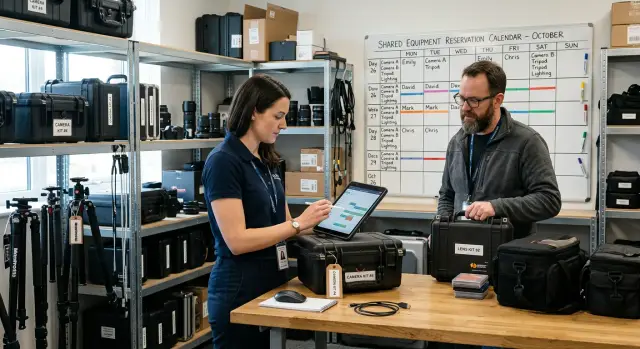
Plan an equipment reservation app that prevents double bookings, records returns and damage, and places faulty items on maintenance hold.

Deep links vs QR codes: learn which is more reliable across devices, how to reduce security risks, and what UX works for onboarding and field work.

The real goal isn’t “open the app.” It’s “open the app to the exact place the user needs right now.” That might be a reset-password screen, a specific order, a pre-filled form, or the right step in a checklist.
This matters most when time and patience are limited. In onboarding, every extra tap increases drop-off. In support, landing on the wrong screen means longer calls and more back-and-forth. For field teams, opening the wrong job or asset record can cause mistakes that are hard to unwind.
When people weigh deep links against QR codes, they’re usually trying to avoid a few predictable failures:
From the user’s side, success should feel boring: one action, the same result across devices, and a clear fallback when something fails. It also has to be safe, meaning only the right person can see the right data.
Example: a new hire gets a welcome message and needs to complete “Profile Setup Step 2.” If the link or scan drops them on a generic dashboard, they may never find the task. A good flow takes them straight to that step, already signed in or guided to sign in first.
If you’re building the app in a tool like AppMaster, you can design the target screens and routing logic visually. The experience still depends on choosing an entry method that behaves well on real phones.
A deep link is a special URL that opens a specific place inside an app, not just the app’s home screen. It can take someone straight to “Reset password,” “Confirm email,” or “Work order #4182.”
There are a few flavors:
A QR code isn’t a navigation method by itself. It’s a delivery method: a camera scan that usually contains a URL (or sometimes a short payload like an ID). What happens next depends on what that QR code points to.
In practice, a QR code usually points to one of three things: a deep link into the app, a web page that does the job in the browser, or a store page if the app is missing.
Reliability is where the debate gets real. Both approaches can work well, but their weak points differ. Deep links depend on OS-level association and browser behavior. QR codes depend on the scanning app and what it decides to open.
On iOS, Universal Links are usually smooth when set up correctly. Safari can open the app directly with fewer prompts. Other browsers and in-app browsers can behave differently, and users can still see a choice screen they might cancel.
On Android, App Links and intents are powerful, but behavior varies more by device maker and default apps. “It works on my phone” doesn’t mean it works across your fleet.
The biggest split is installed vs not installed:
QR codes add another layer: the camera app. Some camera apps open links in a preview, some open them immediately, and some route to a built-in browser that behaves differently from the user’s default browser. A common failure is “the scan worked,” but it opened a page that can’t pass context into the app.
Enterprise and older devices are a special case. Managed phones may restrict browsers, block store access, or disable certain handlers. Older OS versions may not support modern link-association rules, which increases prompts and forces more user decisions.
Testing on a few phones isn’t enough. A small test matrix catches most surprises:
A tap or scan can “succeed” even when the job can’t. With QR codes, the camera reads the code instantly, so it feels like it worked. Then the phone tries to open a page, an app screen, or fetch data, and fails on the next step. Deep links can fail the same way: the app opens, but the destination screen still needs a network call to load the right record.
Field conditions make this common. Basements, warehouses, elevator shafts, and rural sites often mean weak service, captive Wi-Fi networks, or short dropouts. That might be enough to launch an app, but not enough to load a heavy screen or download fresh config.
Offline-friendly patterns matter more than picking one method over the other. A few that work well:
Sometimes a local code should open a screen that works without internet. For example, a QR code on a machine can contain only a machine ID and route to a “Quick Actions” page that lets a technician start a checklist, capture photos, and add notes offline. The app can attach the machine ID to everything and sync later.
When the device is offline, be direct about what happened and what’s safe to do next. A good message explains what’s unavailable (“Can’t load job details without a connection”), what still works (offline checklist, saved draft), and offers a clear next step: retry, switch to manual entry, or save for later. If you’re building with a platform like AppMaster, plan these offline states as real screens, not one-line error popups.
Security is where the choice starts to matter. Both methods can get users to the right place, and both can be used to send users to the wrong place if you don’t add guardrails. Most problems aren’t caused by the format. They come from weak validation and unclear destinations.
Common real-world risks:
Protect users by making the destination predictable. On mobile, prefer verified app links and domain allowlists where possible. Inside the app, show a clear destination label (for example, “Open Work Order 1832 in ACME Warehouse”) and add a confirmation screen when the action is sensitive (payments, password reset, admin actions). That small pause prevents a lot of “scan and panic” mistakes.
Protect data by keeping QR payloads and URLs boring. Don’t embed emails, phone numbers, or anything that identifies a person. Use opaque identifiers or tokens instead.
A solid token setup is typically short-lived (minutes, not days). For high-risk actions, make it one-time use. Keep permissions limited to the exact screen and action needed, and bind it to context when you can (tenant, device, or session).
Operational controls matter too, especially for field workflows. Plan how you’ll replace damaged codes, how staff will report suspicious stickers, and how you’ll keep audit logs of scans and link opens. Whatever you build, record who initiated the action, which code was used, and what screen was opened so you can investigate quickly.
Onboarding works best when the user goes from “I want to start” to the exact screen they need with almost no thinking. The UX goal is simple: remove doubt and remove dead ends.
First-run friction usually shows up when the app isn’t installed. If a link or scan only works inside the app, don’t leave people stuck on a blank page or a confusing error. Send them to a fallback page that clearly says what will happen next: install the app, then return to the same invite or setup step.
Make the destination obvious. If someone taps an invite to “Join Team Acme,” the first screen should confirm that in plain text. If you have to route through a loading screen, keep it short and tell them what you’re doing (“Opening your workspace…”).
Keep permissions minimal in the first minutes. Don’t ask for camera, notifications, and location up front. Ask only when the user reaches a step that needs it, like scanning a QR code or enabling alerts for account activity.
When something fails, recover gently. Give people a one-tap way forward: try again, enter a code manually, view help steps (or contact an admin), or continue in limited mode.
Finally, measure where people drop. Track events like invite opened, app installed, deep link resolved, scan succeeded, and fallback used. If you’re building onboarding in AppMaster, it helps to model these as explicit screens and actions so you can adjust the flow without rebuilding the entire app.
A simple example: a new hire receives an email invite, lands on a clean setup page if the app is missing, installs, then the same invite opens directly to “Set password” and “Join workspace,” with camera permission asked only when they choose “Scan badge later.”
Field work is often a “seconds count” situation. The best UX gets a worker from phone-in-hand to the right screen with one action, without typing or hunting through menus.
QR codes shine here because scanning is fast and works even when the person doesn’t know the asset ID. Pair the QR with a deep link so the scan opens the exact in-app screen (for example, “Asset 1842 - Inspection checklist”), not a generic home page.
Small design choices make scanning succeed more often. Print large codes and add a plain label (“Pump P-1842”) so people know they grabbed the right one. Leave empty margin around the code, avoid glossy surfaces that cause glare, and place codes where a phone camera can reach safely. Assume gloves and one-handed use: big buttons, no tiny toggles, short forms. Also optimize for repeat use, where the same scan triggers the same primary action every time.
Also design the support path for when scanning fails. Don’t make workers guess. Use clear error messages (“Can’t read code” vs “No network”), offer a flashlight toggle and a try-again screen with quick tips, and provide a manual fallback (short asset code entry or a searchable list). Save partial work locally and sync when online.
If you’re building this in a no-code tool like AppMaster, keep scan outcomes consistent: scan, resolve asset, open one dedicated screen.
The best choice usually isn’t “deep links or QR codes.” It’s picking a primary path that fits the moment (onboarding, field work, customer support), then adding a fallback that keeps people moving when something fails.
If you’re building with AppMaster, treat routes like product features: name them, version them, and test them every release.
Maintainability improves when every scan or tap hits a single, stable entry point and routing happens in one place. That way, when screens change, you update rules once instead of reprinting labels or hunting down old links.
A practical setup:
/open/job) with readable parameters (job_id=123, mode=checkin). Avoid stuffing lots of state into the URL.v=1) so you can change behavior later without breaking old codes.For QR printing, “works in the real world” beats “looks pretty.” Use a large enough code, high contrast, and an empty margin around it. Choose error correction that tolerates scratches, and test scans in the actual lighting and distance where people will use it.
For analytics, keep it minimal: opened (scan or tap), routed to app or web, success (correct screen shown), failure reason (no app, expired, offline), and time to complete. Avoid logging sensitive IDs when short-lived tokens will do.
A new field technician, Maya, joins a facilities team. The goal is simple: every scan should take her to the exact right screen, with as little typing as possible. This is where deep links and QR codes work together.
On day 1, Maya gets a badge with a QR code. She scans it and lands in a short onboarding flow. If the app is already installed, the scan opens the app and drops her into the right workspace (for example, the “North Campus” team). If the app isn’t installed, the same QR code opens a web page that clearly explains the next steps: install, sign in, then tap one button to continue.
The onboarding QR can carry a short invite token that expires quickly, so it can’t be reused later. After sign-in, the app exchanges it for a normal session and the token is no longer useful.
In the field, Maya scans a QR sticker on an air handling unit. This time the scan opens a maintenance form with the asset already selected. The form can prefill details like location, model, and the last service date, so she only answers what changed.
The experience stays consistent:
For a security twist, the team trains people to watch for replaced stickers. The app checks that the QR resolves to an approved domain before opening anything sensitive. If it doesn’t match, it shows a warning and offers a one-tap “report sticker” action so the site lead can replace it quickly.
Most issues show up in the gaps: different devices, missing apps, weak signal, and unclear failure screens. Do a final pass with a “nothing goes right” mindset.
Run these checks with at least one iPhone and one Android phone (ideally one older device too), using the same link or QR code you plan to print or send:
If you’re building the flow in AppMaster, a dedicated “link/scan entry” screen works well: validate first, then route only after checks pass.
Don’t roll this out everywhere first. Start small so you can catch device quirks, scanning issues, and user confusion before it becomes a support problem.
Pick one workflow that matters (for example, “new user joins a team” or “tech confirms a work order on-site”), one team, and one device group. Keep the pilot tight enough that you can watch real people use it, not just read logs.
Write your fallback rules once, then reuse them everywhere. A simple set is: open the app to the right screen when possible; otherwise open a web page that supports the same action; and if neither works, show short support instructions. Consistency matters more than clever routing.
Also decide who owns the physical side. In field work, the most common failure isn’t the link, it’s a damaged or missing label. Assign one person or role to replace QR stickers, keep spares, and confirm the replacement code is registered.
A low-risk build path:
If you want to move quickly, AppMaster (appmaster.io) can help you prototype the routing logic, screens, and backend flows in one place, then evolve the app as you learn what your pilot actually needs.
 When should I use a deep link instead of a QR code?
Use deep links when the action starts on a screen (email, SMS, chat, web portal) and you want one-tap routing to a specific in-app page. Use QR codes when the action starts in the physical world (equipment labels, badges, posters) and typing IDs would be slow or error-prone. In many real workflows, the best setup is a QR code that contains a verified app link so a scan behaves like a deep link.
What are the most common reasons deep links or QR scans fail?A deep link can fail if the app isn’t installed, if iOS/Android link association isn’t configured correctly, or if the link is opened inside a browser that blocks the handoff. QR codes can fail if the camera/scanner opens the URL in a restricted in-app browser, or if the QR points to a page that can’t preserve context into the app. Plan for the installed and not-installed cases explicitly, and test across a small device matrix.
How do I make deep links reliable on both iOS and Android?Use Universal Links on iOS and App Links on Android so the OS can verify your domain and open the app with fewer prompts. Keep one stable entry URL and route inside the app based on minimal parameters (like an ID and a short-lived token). Always have a clear fallback that still helps the user finish the task if the app can’t open.
What should happen if the user scans or taps but the app isn’t installed?Don’t send people to a dead end. Send them to a simple fallback page that explains what will happen, then guides them to install and continue to the same destination after install. If returning to the exact screen isn’t possible, show a short code they can paste or enter in the app to resume.
How should I handle poor network or offline use after a scan or deep link?Yes, and it’s common in basements, warehouses, and rural sites. The safest pattern is to open a lightweight screen first, show cached data when possible, and queue actions for later sync. Also provide a manual fallback (search, short code entry) so users can keep working even when auto-routing can’t load the record.
Are QR codes less secure than deep links?QR codes are easy to replace or tamper with, and links can be spoofed with lookalike domains. Reduce risk by using verified app links, showing a clear destination label inside the app, and adding a confirmation step for sensitive actions. Keep QR payloads and URLs free of personal data, and use short-lived, limited-scope tokens instead.
What should I avoid putting in the URL or QR code payload?No. Avoid emails, phone numbers, names, or anything a person could recognize as sensitive. Use opaque IDs or short-lived tokens and validate them server-side before showing data or performing actions. If someone screenshots or shares the link, it should expire quickly and reveal nothing on its own.
What’s the best UX pattern for onboarding invites that use links or QR codes?Send the user to a fallback page that confirms the destination in plain text (like “Join Team Acme”) and explains the next step. Delay permissions until the moment they’re needed, and add gentle recovery options when something fails (try again, enter a code, contact an admin). Track where people drop off so you can fix the highest-friction step first.
What’s the best UX pattern for QR codes on equipment in the field?Print large, high-contrast codes with an empty margin and a plain text label so people can verify they scanned the right asset. Make the post-scan flow one consistent action that always lands on the same dedicated screen for that asset or job. When scanning fails, show a clear reason and offer quick fixes plus a manual fallback.
How do I keep links and QR routes maintainable as the app changes?Use one stable entry route and keep routing logic centralized so you can change screens without reprinting codes or updating old messages. Add light versioning in the parameters so older codes still work while you migrate. If you’re building with AppMaster, model the entry screen and routing as a first-class flow so you can update validation, fallbacks, and destinations without rebuilding everything from scratch.
Experiment with AppMaster with free plan.
When you will be ready you can choose the proper subscription.
 Jul 14, 20268 min
 Jul 13, 20268 min
 Jul 08, 20268 min