


 Jul 14, 2026
 8 min
8 minEquipment reservation app: prevent conflicts and track returns
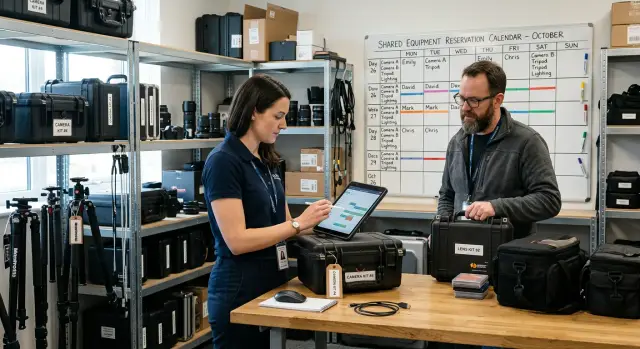
Plan an equipment reservation app that prevents double bookings, records returns and damage, and places faulty items on maintenance hold.

Database-driven localization helps teams store translations, set fallbacks, and update copy safely without redeploying web and mobile apps.

Most products still treat UI text as part of the release. A simple wording change means editing code or translation files, opening a pull request, waiting for review, and shipping a new build. If your app has web and mobile clients, that can mean multiple releases for a change that should have taken five minutes.
When copy lives in code files, it becomes easy to break things without noticing. Keys get renamed, files drift between branches, and different teams update different places. Even when nothing breaks, the process is slow because the safest way to change text is to follow the same pipeline as a feature.
What users see when something goes wrong is rarely subtle:
checkout.pay_now instead of real text
n- A mix of languages on one screen
n- Empty labels, buttons, or error messages
n- The wrong wording for the region (currency, legal terms, support hours)Missing translations are especially painful because they often show up only in less-used locales. A QA pass in English can look perfect, while a customer in Spanish hits an untranslated payment error at the worst moment.
Teams end up avoiding updates because they feel risky. Support asks for a clearer message, legal needs a disclaimer, marketing wants a headline tweak, and everyone waits for the next release window.
Database-driven localization changes the pattern: store translations and fallback rules where they can be updated safely, validated before publishing, and rolled back instantly. It turns copy updates into a controlled content change instead of a deployment event.
Database-driven localization is easier to plan when everyone uses the same words for the same things. These terms also help you separate what changes often (marketing copy) from what should stay stable (keys and rules).
A translation is the language-specific text your app shows. The content is the meaning and intent behind that text. For UI labels like button text, you usually want short, consistent translations ("Save", "Cancel"). For long-form content like onboarding tips, empty states, or help text, you may need more freedom to rewrite, not just translate, so it sounds natural.
A locale is a language tag that tells you which version to show. You will often see patterns like:
en (English)en-US (English as used in the United States)pt-BR (Portuguese as used in Brazil)fr-CA (French as used in Canada)The language part (like en) is not the same as the region part (like US). Two regions can share a language but still need different words, currency formats, or legal phrasing.
A key is the stable ID your app uses to ask for text, like checkout.pay_now. The value is the translated text stored for a specific locale. Fallbacks are the rules you apply when a value is missing, so the UI never shows blanks or raw keys. A common approach is: try fr-CA, then fr, then a default like en.
A content variant is not about language, but about differences for a specific context. For example, the same English locale might need different copy for EU vs US, or for Free vs Pro plans. Variants let you keep one key while safely serving the right version based on rules you control.
Stable keys are the foundation of database-driven localization. If the key changes, every locale entry becomes “missing” at once. The goal is simple: pick keys you can keep for years, even when the visible text changes.
Start by deciding what deserves a key. Anything user-facing and likely to change should be key-based: button labels, form hints, empty states, email and SMS templates, push notifications, and help text. For one-off debug strings or temporary admin notes, keys often add more work than value.
Human-readable keys are easier to manage in reviews and support tickets, for example checkout.button.pay_now. Hashed or auto-generated keys avoid bikeshedding, but they make it harder for non-developers to find the right string in a database UI. A common compromise is human-readable keys with clear rules and ownership.
Namespaces keep keys tidy and prevent collisions across channels. Split by surface first (web, mobile, email), then by feature. For example: web.settings.save, mobile.settings.save, email.invoice.subject. This also helps when the same phrase must differ by channel.
A few rules that keep keys stable:
button.submit_order, not button.place_order_now).For dynamic values, store a template with placeholders, not concatenated fragments. Example: "Hi {first_name}, your plan renews on {date}." Your app supplies first_name and a locale-formatted date. If you build with AppMaster, keep placeholders consistent across web, mobile, and emails so the same content can be updated safely without touching logic.
A workable database-driven localization model is simple on purpose. You want a structure that is easy to query at runtime, but also safe for people to edit without breaking the UI.
Start with two concepts: a stable translation key (like billing.plan.pro.title) and a per-locale value. In PostgreSQL (which fits well with AppMaster’s Data Designer), that usually means one table for keys and one table for translations.
-- Translation keys (stable identifiers)
create table i18n_key (
  id bigserial primary key,
  key text not null unique,
  description text
);

-- Actual translated values
create table i18n_translation (
  id bigserial primary key,
  key_id bigint not null references i18n_key(id),
  locale text not null,          -- e.g. en-US, fr-FR
  value text not null,
  status text not null,          -- draft, review, published
  source text,                   -- manual, import, vendor
  updated_by text,
  updated_at timestamptz not null default now(),
  is_published boolean not null default false,
  unique (key_id, locale)
);
The metadata is not decoration. updated_by and updated_at give you accountability, and source helps when you later audit why copy changed.
For versioning, you have two common options. The simplest is a publish flag: editors can save drafts, then flip is_published (or change status) when it is approved. If you need a full history, add an i18n_translation_revision table that stores old values with a revision number and who changed them.
Long text needs a clear rule. Use text (not a short varchar) and decide what formatting you allow: plain text only, or a limited markup you render safely. If you support placeholders like {name} or {count}, validate them on save so a long paragraph cannot accidentally remove a required token.
Done well, this model lets teams update copy safely while keeping runtime lookups predictable.
A good fallback system keeps your UI readable even when a translation is missing. In database-driven localization, this is mostly policy: decide the order once, then make every screen follow it.
Start with a predictable chain that matches how people expect language to work. A common pattern is:
That last step matters. If a key is missing everywhere, do not show a blank label. A blank button can break a flow because users do not know what they are clicking. Use a placeholder that is obvious but not scary, like the key name wrapped in brackets (for example, [checkout.pay_now]). This makes problems visible during testing, and it is still usable in production.
When should you show the base language vs a placeholder? If your base language string exists, show it. It is almost always better than a placeholder, especially for common UI actions like Save, Cancel, or Search. Save placeholders for true “nothing found anywhere” cases, or for restricted content where showing the default language could be a legal or brand issue.
Missing keys should be logged, but logging needs limits so it does not turn into noise.
Example: your app requests fr-CA for a Canadian user. If marketing updates only the fr text, users still see French instead of broken UI, and your team gets a single, clear signal that fr-CA needs attention.
Translations are not always the whole story. Sometimes the same language needs different copy depending on where the user is, what they paid for, or how they arrived. That’s where content variants fit into database-driven localization: you keep one base message, then store small overrides for specific cases.
Common variant types you can support without overcomplicating your schema:
The key is to keep variants small. Store only what changes, not a full duplicate set of strings. For example, keep the base CTA “Start free trial” and override only the few screens where Free users should see “Upgrade to Pro” instead.
When multiple variants could match (say, a Pro user in Canada on mobile), you need clear priority rules so the UI stays predictable. A simple approach is “most specific wins,” based on how many attributes match.
Here’s a practical priority order many teams use:
To avoid creating a variant for every tiny change, set a threshold: only add a variant when the difference matters to user action, compliance, or meaning. Cosmetic preferences (like swapping two adjectives) are better handled through writing guidelines, not extra branches.
If you build in AppMaster, you can model variants as optional fields in your translation table and let non-developers edit approved overrides in one place, without touching app logic.
If copy lives in the database, non-developers can update text without waiting for a release. That only works if you treat translations like content, with clear roles, approvals, and an easy way to undo mistakes.
Start by separating responsibilities. A writer should be able to change wording, but not publish it alone. Translators should work from the same stable keys. Reviewers check meaning and tone. A publisher makes the final call and pushes changes live.
A simple workflow that works well is:
That last step matters. Keep an audit trail on every change: key, locale, old value, new value, author, timestamp, and an optional reason. Even a basic log makes it safe to move fast, because you can see exactly what happened.
Rollbacks should be a first-class action, not a manual cleanup. If a headline breaks the UI or a translation is wrong, you want a one-click revert to the previous Published version.
A quick rollback plan:
If you build this in a no-code tool like AppMaster, you can model the states, permissions, and logs visually, and still keep the safety net that teams expect from a traditional release process.
Start by listing every user-facing string you show today: buttons, error messages, emails, and empty states. Group them by product area (checkout, profile, support) so ownership stays clear and you can review changes faster.
Next, define stable translation keys and choose one default language that always has a value. Keys should describe intent, not wording (for example, checkout.pay_button). That way copy can change without breaking references.
Here is a simple implementation path for database-driven localization:
status (draft, published), updated_by, and published_at.Finally, add guardrails. Log missing keys, invalid placeholders (like a missing {name}), and formatting errors. These logs should be easy to filter by locale and app version.
If you are using AppMaster, you can model the tables in the Data Designer, build the edit and publish screens with the UI builder, and enforce approval rules in a Business Process. That keeps updates safe while still letting teams move quickly.
A customer portal supports English (en), Spanish (es), and French Canadian (fr-CA). The UI text is not baked into the app build. It is loaded from a translations table at runtime, using database-driven localization.
On Friday afternoon, marketing wants to change the pricing banner from “Start free, upgrade anytime” to “Try free for 14 days, cancel anytime.” They also need a shorter version for mobile.
Instead of asking engineers to cut a release, a content editor opens an internal “Translations” screen, searches for the key portal.pricing.banner, and updates the en value. They add a second value tagged as a “mobile” variant so the app can choose the right copy based on screen size.
Spanish is updated too, but fr-CA is still missing. That is fine: the portal automatically falls back from fr-CA to fr, so French users see a safe, readable message instead of a blank label or a raw key.
A reviewer then notices a typo in the English text. Because each edit is versioned, they can roll back to the previous value in minutes. No backend redeploy is needed, and there is no app store update for iOS or Android.
Here’s what this looks like in practice:
If you build this in AppMaster, the same idea can be supported with a small admin panel, role-based access (editor vs reviewer), and a simple approval step before changes go live.
When copy can change from the database, quality checks need to be quick and repeatable. The goal is simple: every locale should look correct, read correctly, and load fast even right after an update. That is the promise of database-driven localization, but only if you watch the right things.
Start with a small smoke test after any batch of edits. Pick the pages people see most (login, dashboard, checkout, settings) and view them in every supported locale. Do this on both desktop and a smaller phone screen, because the most common failure is not missing text, it is text that no longer fits.
Here are the fastest checks that catch most issues:
Monitoring should tell you if the system is getting worse over time. Track counts such as missing keys per locale, fallback hits, and rollbacks after edits. A sudden spike usually means a key changed, a placeholder mismatch, or a bad import.
For performance, cache what is safe: resolved translations per locale and version, with a short refresh interval or a simple “translation version” number. In tools like AppMaster, this can be paired with a lightweight refresh on publish so users get updates quickly without extra load on every page view.
Database-driven localization makes copy changes faster, but a few common missteps can turn it into a source of broken screens and confusing text.
One risk is letting anyone edit production text with no review. Copy changes are “safe” only if you can see what changed, who changed it, and when it goes live. Treat text like code: use drafts, approvals, and a clear publish step. A simple rule helps: edits happen in a staging environment first, then get promoted.
Unstable keys cause long-term pain. If your key is based on the current sentence (like "welcome_to_acme" becoming "welcome_back"), every rewrite breaks reuse and analytics. Prefer stable, purpose-based keys such as "home.hero.title" or "checkout.cta.primary", and keep them even when the wording changes.
Hardcoding fallbacks in different places is another trap. If the backend falls back to English, but the mobile app falls back to “any available,” users will see different text across platforms. Put fallback rules in one place (usually the backend service) and make every client follow it.
Rich text needs rules. If translators can paste HTML into the database, one bad tag can break layout or create security issues. Use placeholders (like {name}) and a small allowed formatting set that is validated before publishing.
Finally, variants can explode. Variants for region, plan, and A/B tests are useful, but too many become impossible to track.
Common fixes that work well:
Example: a marketing writer updates a CTA for a “Pro” plan variant, but forgets to update the “Default” variant. With a validation rule that blocks publishing when required variants are missing, you avoid a blank button label. In AppMaster, the same idea applies: keep the translation data model strict, validate before deploy, and you can update copy without fear.
A database-driven localization setup is only “safe” when the rules are clear and the editing flow has guardrails. Before you invite non-developers to update copy, use this short checklist to spot gaps that usually cause broken UI text.
Start small: pick one product area (like onboarding or billing) and move only that copy into the database. This gives you a real test without risking the whole app.
Prototype the data model and a simple editor UI in AppMaster. Keep the editor focused: search by key, edit per locale, preview with variables, and show which fallback will be used when a translation is missing.
Then connect the localization service to your web and mobile apps. Make the first integration read-only, so you can verify key coverage, fallbacks, and caching behavior. After that, enable publishing with approvals and a rollback button.
Finally, treat localization updates like any other production change: review changes, run a quick smoke test in the main user flows, and watch your “missing key” logs for the first day after release. This is the fastest way to catch gaps before users do.
 What is database-driven localization?
Store each user-facing string under a stable ID, then keep a separate value for each locale. Your app looks up the value at runtime, so approved copy changes can go live without a code release.
Why use a database for translations?It lets writers and reviewers update text through a controlled editor instead of changing code or translation files. With drafts, approval, and rollback, teams can fix copy faster without bypassing checks.
How should I name translation keys?Use a stable, purpose-based name such as checkout.button.pay_now. Do not put the current sentence, price, date, or customer name in the key, because those details change often.
What fallback order should my app use?Try the full locale first, then its base language, then your default locale. For example, fr-CA can fall back to fr, then en; show a visible safe placeholder only when no value exists anywhere.
How do I handle names, dates, and other dynamic values?Use placeholders inside one complete sentence, such as Hi {first_name}, your plan renews on {date}. Validate required placeholders before publishing, and let the app format dates, numbers, and currency for the selected locale.
When do I need content variants?Keep the base translation for the normal case, then add a small override when context changes meaning or action. Useful examples include plan-specific calls to action, regional legal wording, or shorter mobile text.
How can non-developers edit translations safely?Give editors permission to create drafts, reviewers permission to approve them, and publishers permission to send them live. Record the old and new value, locale, author, time, and reason for every published change.
How should translation rollbacks work?Save published revisions for every key and locale, then offer a revert action that restores the previous published value. Limit that action to publishers and show the affected text before they confirm.
What should I test before publishing new copy?Check the main flows in every supported locale, including error and empty states. Test long text on a phone screen, verify placeholders render correctly, and switch locales during a session to catch stale text.
Will runtime translation lookups slow down my app?Cache resolved published strings by locale and translation version, then clear or refresh that cache when someone publishes. This reduces database reads while still letting users see approved changes quickly.
Experiment with AppMaster with free plan.
When you will be ready you can choose the proper subscription.
 Jul 14, 20268 min
 Jul 13, 20268 min
 Jul 08, 20268 min