


 Jul 14, 2026
 8 min
8 minEquipment reservation app: prevent conflicts and track returns
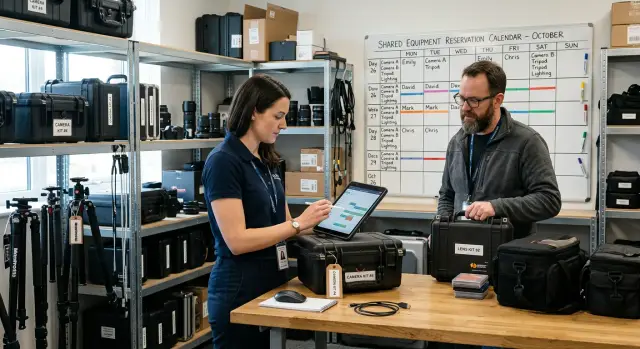
Plan an equipment reservation app that prevents double bookings, records returns and damage, and places faulty items on maintenance hold.

Build a customer feedback and complaint tracker that categorizes issues, assigns an owner, sets due dates, and keeps every complaint moving to resolution.

Most teams don’t ignore customers on purpose. Feedback just lands in too many places: support inboxes, live chat, social DMs, sales notes, call transcripts, and someone’s “temporary” spreadsheet. A few days later the context is gone, the person who saw it first is busy, and the customer hears nothing.
A customer feedback and complaint tracker prevents that by giving every item one home, one owner, and a clear path to closure. Instead of hunting through threads, you can answer a simple question any time: “What’s happening with this issue right now?”
It helps to be clear about what you’re tracking:
They can overlap, but they shouldn’t be handled the same way. A suggestion might wait for planning. A bug needs diagnosis and a fix. A complaint needs acknowledgement, a fair outcome, and steady communication.
“Resolved” should mean something concrete, not “we looked at it.” Resolution usually includes four basics: the customer is updated (even if the answer is “not possible right now”), the fix is shipped or the change is scheduled with a real date, any promise is completed (refund processed, credit applied, account corrected), and the internal record shows what happened and why.
Once you work from a single tracker, items stop disappearing. Everyone sees the same truth: what came in, who owns the next step, when it’s due, and what “done” looks like.
A tracker only works if adding an item takes under a minute. Start with a small set of required fields, then keep the rest optional so intake stays fast.
A solid minimum set:
Once the basics are consistent, optional details can reduce back-and-forth: product area (billing, onboarding), related order or invoice number, attachments or screenshots, severity (impact on the customer), and a simple sentiment flag (positive, neutral, negative). If optional fields start slowing people down, they’ll stop using the system.
IDs and timestamps turn a list into something you can measure. Add a unique ID plus created at, updated at, first response time, and resolved at. Later you can answer questions like “How long do billing complaints take?” without manual work.
A practical rule is to require only what you truly need at intake, and push everything else into a follow-up step owned by the assignee.
A tracker only works if people can file items quickly and find them later. That means categories should match how your team already thinks about work.
Start with a small, stable set. Five is usually enough:
Treat the category as the single best answer to: “What kind of problem is this?” Use tags for extra detail without creating category sprawl.
Good tags are concrete and reusable, like plan, device, region, or channel (for example: “iOS”, “EU”, “chat”, “refund”, “checkout”). If a tag is used once a month, you probably don’t need it.
Priority is where trackers often break, because everything becomes “high.” Keep it simple and fast to apply. A quick check of impact, urgency, reach, and risk is usually enough to pick a sensible priority.
Also build a clear duplicate path. When the same issue is reported again, link it to the original item, add any new details, and mark the new one as a duplicate. That keeps the list clean while showing how widespread the problem is.
A tracker works when two things are always obvious: who owns the next action, and what stage the item is in. If either one is fuzzy, the tracker turns into another inbox.
Decide who can create items, and keep that group small enough to manage. A common split is: support captures anything from tickets, chat, or calls; sales or success logs feedback from demos and renewals; ops, product, or engineering logs issues found internally; and customers can use a short form that creates a new item.
Ownership should mean one thing: the owner is responsible for the next step and the next customer update, not necessarily the final outcome. If a billing complaint needs an engineering fix, support can own it until the handoff is clean, then reassign it with clear notes and a due date.
Keep statuses consistent and easy to explain. A practical flow is:
To avoid items bouncing around, define what triggers each change. For example, New becomes Triaged when category, priority, and owner are set. Triaged becomes In progress when the owner takes a concrete action (reply sent, task created, or investigation started). In progress becomes Waiting on customer when you asked a question that blocks the next step. Waiting on customer goes back to In progress when the customer responds (or you decide to proceed without them). Resolved becomes Closed when the customer confirms, or after a clear time window with no further issues.
A tracker without due dates turns into a parking lot. People add items with good intentions, then work shifts to “what’s loudest” and older complaints quietly age. Every item needs a due date, even if it’s just a triage deadline.
If you don’t know when something will be fixed, you can still set when it will be looked at next. That one date creates a clear next action and a natural moment to communicate with the customer.
Different work needs different clocks. A simple setup many teams can stick to:
This avoids the trap where “resolution due” is set far out and nobody feels pressure to keep the customer informed.
Escalation isn’t punishment. It’s a safety net when a day gets busy or an owner goes offline. Keep it predictable: reminders before and after a due date, a manager ping after a short grace period (for example, 24 hours overdue), a clear reassign option, and a “blocked reason” note so it’s obvious what help is needed.
An “SLA notes” field also helps when an overdue item is still acceptable (customer asked to pause, vendor delay, security review). The point is that nothing sits silently.
A tracker needs a clear path from “we heard you” to “it’s fixed.” This five-step flow is simple enough for busy teams, but structured enough that nothing gets lost.
Capture everything in one place. Collect feedback from email, chat, calls, and a short form. If it isn’t in the tracker, it doesn’t exist.
Triage daily on a schedule. Spend 15 to 30 minutes sorting new items: choose a category, set priority, assign an owner, and add a due date. If you can’t do those four, ask one follow-up question and move it to Waiting on customer.
Work the item with visible progress. Break it into one to three tasks, keep internal notes for context, and log every customer update. A quick “We’re looking into it and will update you by Thursday” reduces repeat messages and sets expectations.
Resolve, confirm, then close. Mark it resolved only when the fix is done (or the decision is final). Send a confirmation, then close it. If the customer doesn’t reply, close after a timeout you define (for example, 3 business days).
Review weekly for repeat offenders. Look for patterns: a category spiking, the same root cause, or the same step where items stall. Turn the top one or two repeats into a concrete change (documentation, product fix, training).
A tracker works when people can see their work in seconds. The main view should feel like an inbox: new items, untriaged items, and anything that needs a quick reply. From there, add a few focused views that match how work actually gets done: by owner (what I need to do today), overdue (what’s already late), by category (what’s piling up), and by customer (what one account keeps raising).
Saved filters help people stay consistent without thinking too hard. Keep them limited and obvious, like “High priority”, “Waiting on customer”, and “Needs triage”. If you need dozens, it’s often a sign your categories or status steps aren’t clear.
You don’t need a complex BI setup. A lightweight dashboard can answer: how much came in, are we keeping up, and where are we falling behind? Track volume by week, time to first response, and time to resolution.
Add one simple trend view: top categories over the last 30 days. If “Billing” or “Login issues” spikes, you can fix the root cause instead of handling the same complaint again and again.
A practical split is a manager dashboard (metrics and trends) plus a focused list for each owner (today, overdue, waiting). That way leads can see what’s rising while each owner sees exactly what they’re responsible for, with due dates.
A customer emails: “I was charged twice for my monthly subscription. Please fix this today.” Instead of leaving it in an inbox thread, create a new item in the tracker.
Capture the basics: customer name, account ID, plan, invoice numbers, amount, date of charge, and a screenshot if they have one. Categorize it as Billing > Double charge, tag it (for example) subscription and refund, and set priority to High because it involves money and trust.
Assign a specific owner (the billing specialist, not “Support team”). Set a due date for the same business day, plus an internal target like “first reply within 1 hour.” Add a short checklist in the notes: confirm payment processor status, check duplicate invoice creation, validate refund rules.
Post customer updates as comments so anyone can step in without re-reading emails:
When the refund is confirmed, move the item to Resolved and record the outcome: refund amount, timeline, and the cause (for example, retry logic created a second invoice after a timeout). Then add a prevention note, like an alert for duplicate invoice IDs or a validation step in checkout.
Most trackers fail for the same reason: they look organized, but they don’t change what people do each day. The tracker works when triage is fast, ownership is obvious, and follow-up is built in.
Too many categories is a common trap. If people hesitate, they’ll pick something random or skip categorizing. Keep categories few and stable, then use tags for extra detail. If you need a new category every week, it’s often a process problem, not a taxonomy problem.
Vague ownership is another failure. “Support” isn’t an owner. “Someone from product” isn’t an owner. Every item needs one name attached to it, even if multiple teams will help. The simplest rule is: the owner drives the next action and the next customer update.
Due dates also become meaningless if nothing happens when they slip. If overdue becomes normal, people stop trusting the tracker. Make escalation predictable.
Common issues to fix early:
A small example: a billing complaint is assigned to “Finance team” with a due date next Friday. Nobody feels responsible, notes include internal blame, and it’s closed once a refund is processed even though the customer never hears back. Instead, assign one owner, keep internal notes separate from customer updates, and require a final “customer notified” check before closing.
Before you invite the whole team, test the tracker with a small batch of real feedback. If it feels slow or unclear in the first 10 minutes, people will fall back to inboxes and chat threads.
A rollout checklist that catches most problems:
Then do a consistency check. Open 10 recent items and see whether two people would categorize and close them the same way. If not, simplify categories or add short examples right in the form.
Finally, make handoffs obvious with one sentence per role:
Treat the first launch like a pilot. The tracker works best when it’s simple enough that people actually use it every day.
Start small on purpose: a short list of categories (around 5 to 8), one clear status flow, and one dashboard view that shows what’s late and what’s blocked. If someone can’t file an item in under a minute, the tracker will lose to the inbox.
Decide who runs triage and what happens when they’re out. “Everyone can triage” usually becomes “no one triages.” Choose a primary owner, name a backup, and agree on a daily time window for review.
A simple two-week rollout plan:
If you want this as a real internal tool (not a spreadsheet), a no-code platform can help. For example, AppMaster (appmaster.io) is built for production-ready apps with a real database, business rules for assignment and due dates, and web and mobile screens for intake and follow-up. Build the first version small, then improve it based on what your team actually uses.
 Why do customer issues disappear in inboxes?
Use one shared tracker for every channel. Give each item a named owner, a status, and a due date so the team can see the next action without searching inboxes.
What details should each feedback item include?Capture a clear title, the customer, source channel, category, priority, owner, status, and next due date. Add invoice numbers, screenshots, and product details only when they help someone act.
How many categories should a feedback tracker have?Use a few stable categories such as billing, delivery, technical issues, feature requests, and account access. Add tags like iOS, refund, chat, or EU for details that cut across those categories.
How should we handle complaints, bugs, and feature requests differently?A complaint needs a response and a fair outcome for a negative experience. A bug report needs investigation and a fix, while a feature request can wait for product planning.
Who should own a customer complaint?One person owns the next action and the next customer update. That person can involve billing, product, or engineering, but the item should never belong to a vague group.
What status flow works for a feedback tracker?Keep the flow simple: New, Triaged, In progress, Waiting on customer, Resolved, and Closed. Define the action that moves an item forward so people use each status the same way.
Which due dates should we track?Set a first-response date, a next-update date, and a final-resolution date. When you do not know the fix date, set a date for the next review and tell the customer when they will hear from you.
What should we do with duplicate reports?Link the new report to the original item and mark it as a duplicate. Keep any useful new details, then use the number of linked reports to judge how widely the issue affects customers.
When should we mark a complaint as resolved?Mark an item resolved only after you deliver the fix or final decision, complete any promise such as a refund, update the customer, and record the outcome. Close it after confirmation or your agreed follow-up window.
What reports should a feedback tracker show?Review volume, first-response time, resolution time, overdue items, and the most common categories each week. Use repeated complaints to choose a specific product, process, or documentation change.
Experiment with AppMaster with free plan.
When you will be ready you can choose the proper subscription.
 Jul 14, 20268 min
 Jul 13, 20268 min
 Jul 08, 20268 min