


 Jul 14, 2026
 8 min
8 minEquipment reservation app: prevent conflicts and track returns
Plan an equipment reservation app that prevents double bookings, records returns and damage, and places faulty items on maintenance hold.

A comprehensive cost analysis comparing rapid app development and traditional development methodologies, evaluating the pros and cons of each, and understanding their impact on businesses.

In an increasingly digitized world, businesses must be agile and innovative to remain competitive and keep up with the rapidly changing market. The need for software applications that address various business needs has skyrocketed. However, traditional software development processes can be cumbersome, time-consuming, and expensive. This has led to the rise of rapid app development – a faster, more efficient, and cost-effective approach to creating software applications.
Rapid app development involves using low-code or no-code tools that provide pre-built components and drag-and-drop functionality, minimizing the need for intensive manual coding. With these tools, even non-developers or citizen developers can build and deploy custom software applications relatively quickly. No-code platforms like AppMaster.io empower users to create backend, web, and mobile applications using a visual interface, dramatically speeding up the development process and reducing costs.
Traditional software development, on the other hand, employs manual coding techniques and skilled software developers to create applications. This approach involves lengthy planning, implementation, and testing phases, translating into higher costs and longer time-to-market.
In this article, we will compare rapid app development with traditional development, providing an in-depth analysis of their respective costs, time-to-market, and their impact on employee utilization.
When comparing rapid app development and traditional development, cost is a primary consideration. Rapid app development can significantly reduce development costs, while traditional development can be expensive due to high resource requirements and longer development times. Let's break down the specific factors that contribute to these cost differences:
It is important to note, however, that the cost reduction potential of rapid app development varies depending on the platform or tool used, the complexity of the application being developed, and other factors specific to the organization and project.
Another significant aspect in the comparison of rapid app development and traditional development is the time-to-market. By reducing the time it takes to create, test, and deploy applications, businesses can achieve a competitive advantage and respond rapidly to market changes.
Rapid app development platforms like AppMaster.io are specifically designed to accelerate the development process without sacrificing quality. This is achieved through:
Compared to traditional development methodologies, rapid app development offers a much faster time-to-market, which has a direct impact on employee utilization and overall work efficiency. By speeding up the development process, businesses can allocate resources more efficiently and focus on higher-level strategic tasks. Moreover, citizen developers can contribute to the development process, empowering them to find and implement their own solutions, improving their overall productivity.
It is crucial for businesses to select the right development methodology that aligns with their specific requirements and organizational needs. Rapid app development provides numerous benefits, including cost savings and quicker time-to-market, which can ultimately improve the organization's competitiveness and efficiency. With platforms like AppMaster.io, even non-programmers can quickly and affordably create custom applications that cater to their unique business needs.
Scalability and flexibility are crucial considerations for any software development project. As the needs of your organization evolve, your applications should be able to scale and grow with it, without sacrificing performance. Comparing rapid app development and traditional development in terms of scalability and flexibility, we observe several key differences:
Overall, rapid app development platforms tend to offer better scalability and flexibility compared to traditional development, resulting in quicker resource allocation and facilitating business growth.
Software maintenance and the management of technical debt are ongoing challenges for businesses that invest in application development. Cost-effective maintenance solutions and reduced technical debt are essential for long-term success.
Rapid app development offers a clear advantage in terms of reducing technical debt and maintenance costs while providing businesses with a more streamlined and efficient way of managing their software applications.
Ensuring the security of your applications and complying with data protection regulations is a top priority for any business in the digital age. Both rapid app development and traditional development have their pros and cons when it comes to security and compliance.
In terms of security and compliance, rapid app development offers a more consistent baseline of protection while reducing human error. Traditional development, however, allows for more customized security solutions, depending on your organization's needs. Ultimately, the choice between these two development methodologies will depend on your business priorities and the level of security and compliance essential for your applications.
The adoption and learning curve for rapid app development and traditional development can significantly impact the overall cost and effectiveness of the development process. In this section, we will discuss the differences in the learning curve, training requirements, and the ease of adoption for these two methodologies.
In rapid app development, developers and other team members typically have a shorter learning curve, thanks to the user-friendly interfaces offered by no-code and low-code platforms. Many of these platforms are designed for users with little to no coding experience, enabling non-technical personnel to participate in the development process.
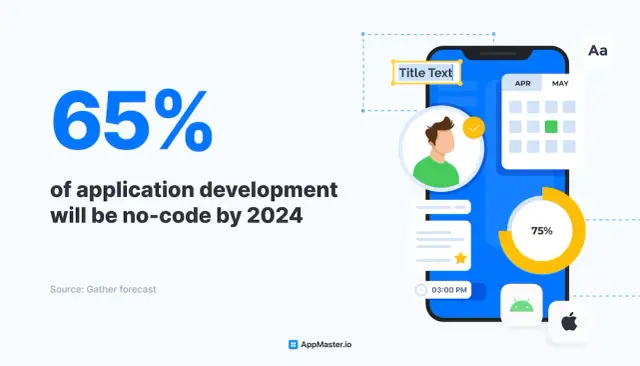
Another benefit of adopting rapid app development is facilitated collaboration between different teams in an organization. It allows for faster onboarding, streamlining the design, development, and testing processes. As a result, teams working on rapid app development projects can be more agile and achieve quicker results.
However, for complex applications that require integration with legacy systems and tools, there might be a slightly steeper learning curve. This is predominantly due to the need to understand the intricacies of the integrations and system requirements. It's essential to choose a rapid app development platform that readily supports integration with the required systems and can overcome these obstacles, like AppMaster.io.
Traditional development often requires a more extended learning period, as each member of the development team has to be skilled in programming languages and frameworks. Additionally, organizations need to invest in training and upskilling developers to stay current with evolving technologies and methodologies. This can be time-consuming and costly.
Collaboration in traditional development can be more challenging, as team members with non-technical backgrounds may find it difficult to read and understand code. As a result, extended communication and coordination between developers, designers, project managers, and other stakeholders can be required to ensure a seamless workflow.
The Total Cost of Ownership (TCO) considers all costs associated with app development, including development, maintenance, support, employee training, and resource utilization. Understanding the TCO for both rapid app development and traditional development plays a crucial role in determining which method is more cost-effective for an organization.
Rapid app development platforms generally offer lower TCO compared to traditional development due to several factors:
In contrast, traditional app development can have a higher TCO due to the following factors:
The TCO for rapid app development is generally lower than that of traditional development due to faster development cycles, better resource utilization, and reduced maintenance and technical debt. However, the choice between rapid app development and traditional development should be carefully evaluated based on the unique requirements of each project and organization.
No-code platforms like AppMaster.io offer a cost-effective solution for rapid app development projects, ensuring scalability, flexibility, and a quicker time-to-market. By considering the TCO, organizations can make informed decisions about the best development approach that aligns with their budget, resources, and overall business objectives.
 What is rapid app development?
Rapid app development is the process of building software applications quickly and efficiently using no-code or low-code tools, minimizing the need for manual coding and focusing more on visual design and drag-and-drop components.
What is traditional app development?Traditional app development is the process of building software applications using manual coding, adhering to detailed planning and step-by-step implementation of features and functionality by skilled developers.
How does rapid app development reduce costs?Rapid app development reduces costs by: Decreasing development time Reducing resource requirements Minimizing potential errors Eliminating or limiting technical debt Providing better scalability and flexibility
What factors affect cost savings in rapid app development?Factors affecting cost savings in rapid app development include the specific tools used, learning curve for new platforms, development timeline, app complexity, and the level of support and maintenance required.
How does traditional app development affect time-to-market?Traditional app development typically has a longer time-to-market due to the complexity of manual coding, more intensive planning processes, and the need for a team of skilled developers to create and maintain the application.
Are there any downsides to using rapid app development?Some downsides to using rapid app development include potential limitations in customization, potentially lower code quality, and possible longer learning curves for new platforms. However, these downsides can be mitigated through careful tool selection and proper training.
What is the Total Cost of Ownership (TCO) for rapid app development and traditional development?The Total Cost of Ownership (TCO) is a holistic evaluation of the expenses associated with app development, including initial development costs, maintenance, support, training, employee utilization, and scalability. TCO varies between rapid app development and traditional development, depending largely on project complexity, tools used, and organizational needs.
Can no-code platforms like AppMaster.io help reduce the cost of app development?Yes, no-code platforms like AppMaster.io can significantly reduce the cost of app development by providing a visual, drag-and-drop interface for building applications, automatically generating code, ensuring scalability, and eliminating technical debt.
Experiment with AppMaster with free plan.
When you will be ready you can choose the proper subscription.
 Jul 14, 20268 min
 Jul 13, 20268 min
 Jul 08, 20268 min