


 Jul 14, 2026
 8 min
8 minEquipment reservation app: prevent conflicts and track returns
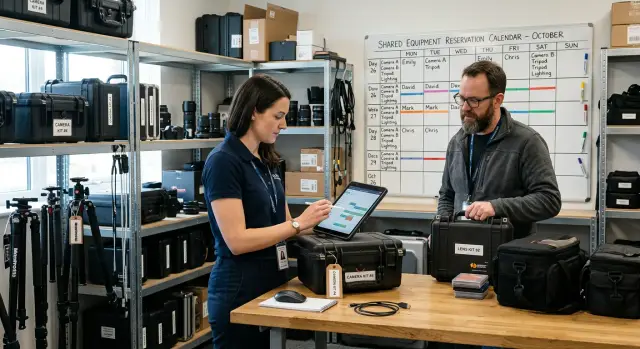
Plan an equipment reservation app that prevents double bookings, records returns and damage, and places faulty items on maintenance hold.

Build a cash register closeout app that tracks sales, refunds, and cash counts, then produces a daily close report with clear discrepancy flags.

A closeout is the end-of-day habit of turning the shift into a clean record: what you sold, what you refunded, what you should have in cash, and what you actually have in the drawer. In a small shop, this often lives on paper, in a spreadsheet, or in someone’s head. That works until you have a busy day, a shift change, or a new cashier.
Mismatches happen even with honest staff because retail is messy. A customer asks for a refund, but the original sale was on a different payment method. A discount was applied, but it was typed as a manual price change. Someone forgets to record a paid-out (like buying milk for the cafe) or mixes personal change with the till. Sometimes it’s as simple as counting too fast while the line is still out the door.
A cash register closeout app fixes this by capturing the same few facts every day, in the same order, so the math is automatic and exceptions are obvious. At minimum, it should record sales totals by payment type, refunds and voids (including how they were paid back), starting cash and ending cash counts, cash movements like paid-ins and paid-outs, and who closed the drawer and when.
A good daily close report isn’t a wall of numbers. It’s a short summary with clear totals and one line that answers: “Expected cash vs counted cash.” If there’s a gap, it should stand out, with enough detail to review quickly.
A cash register closeout app only works if everyone agrees on a few “source of truth” numbers. Keep the set small, but make each one clear and hard to misread.
Start with sales totals, split by payment type. You want at least cash and card, plus an “other” bucket for things like gift cards, store credit, or mobile wallets if you treat them differently. The point is simple: your POS report and your closeout totals should match without interpretation.
Next, track adjustments that change what the shift should have produced. Refunds and voids aren’t the same thing (a void removes a sale; a refund reverses it after the fact), and both can hide errors if they’re lumped together. Discounts matter too because they reduce sales without changing the number of transactions, which can confuse staff during review.
On the cash side, you need a straightforward cash movement story: starting cash (float), drops (money removed from the drawer during the shift), and payouts (cash taken for small expenses). Without these, the drawer can look short even when it’s correct.
The smallest set that makes reconciliation possible:
Expected cash is the computed target:
starting cash + cash sales - cash refunds - payouts - cash drops
Counted cash is what’s physically in the drawer at close.
Example: if expected cash is $412.00 but counted cash is $397.00, variance is -$15.00. A good app records the gap and preserves the inputs so a manager can review what changed, not just see a red number.
A good cash register closeout app doesn’t need a complicated database. It needs a few clear records that answer one question: what should be in the drawer, what’s actually in the drawer, and who was responsible for the shift.
Start by separating “where” and “when” from “money.” A store location can have many registers. A register can have many shifts. A shift is tied to one cashier (plus a manager who reviews it).
Keep the first version tight. These records cover most small-shop closeouts:
You have two options for sales data. If your POS can export totals, store a single SaleSummary per shift (cash sales, card sales, tax, discounts). If not, allow a manual entry screen where the cashier types the totals from the POS “Z report.” Either way, don’t start with item-level sales unless you truly need it.
For cash counts, store entries by denomination so you can audit mistakes. A CashCountEntry can include denomination, quantity, and who counted it. For example, “$20 x 12” plus “$1 x 37.”
Finally, create a Closeout record linked to the shift. Give it a status like Draft (counting in progress), Submitted (cashier finished), and Reviewed (manager approved).
A closeout only works if everyone follows the same path every day. The goal is simple: capture totals, count cash, let the system do the math, then hand it off for review without last-minute edits.
A practical workflow for most small shops:
Locking matters. If someone can edit numbers after the shift, you lose the audit trail and the manager has nothing solid to review. If a correction is needed, treat it as a manager action (with a comment), not a hidden edit.
On the manager side, keep the review screen focused: the summary, the variance, and any flags that need attention. A good pattern is “review, comment, resolve.” For example, a manager sees the drawer is $12 short, reads the cashier note (“two cash refunds, one receipt missing”), then either marks the issue as resolved (with a reason) or requests follow-up.
A closeout tool fails when it tries to do everything. For a small shop, you want a few screens that people can finish fast, even when they’re tired at the end of a shift. The goal is to capture the facts, then show the gap clearly.
A minimal set that covers most stores:
A few UI rules that prevent mistakes:
A closeout is only useful when it tells you what needs attention. Start with one expected-cash formula and make every flag explainable.
Expected cash is usually:
Expected cash = start cash + cash sales - refunds - payouts - cash drops
Use the same formula everywhere: on the close screen, in the daily close report, and in exports. If different screens calculate different numbers, managers stop trusting the report.
Set simple tolerance rules so tiny noise doesn’t create busywork. For example, allow a rounding tolerance of $0.50, or let a manager set it per store. Anything outside tolerance becomes a “short” or “over” flag, with the exact difference shown.
Make flags specific. Common flag types:
Some issues should block submission, not just warn. Require shift date, cashier, register, start cash, cash count, and at least one sales total (even if zero). If refunds, payouts, or drops exist, require a reason note and an approver when needed.
Keep an audit trail. Every change should record who changed it, when, and what changed (old value, new value). If a refund amount is updated after close, the report should show the edit so a manager can review it quickly.
Start small. Pick one store and one register (one cash drawer) and build only for that setup. You’ll learn faster, and your first tests will match real life.
Create three roles and keep permissions tight. Cashiers should only do their own closeout, managers review and approve, and admins can edit configurations.
Before you add logic, make sure you can enter and view clean data. Create tables for shifts, sales totals, refunds, and cash counts. Then build the minimum screens to create a shift, enter totals, and save a cash count.
A solid first pass:
Next, add the formulas and simple rules. Validate that required fields are filled, and block negative numbers where they don’t make sense.
Example: if a cashier enters $120 in refunds but $0 refund count, show an error and require a note.
Create the daily close report page that pulls one shift and shows expected cash, counted cash, and the difference. Test with actual receipts for a few days, including a refund and a small mistake. Only after this is stable should you add extras like multiple registers or partial closes.
Most closeout problems aren’t math problems. They’re missing pieces of the story, or totals that got mixed together early in the day. A cash register closeout app should make it hard to enter unclear numbers and easy to explain what happened.
One common trap is combining payment types in a single total. If a cashier types one “sales total” that includes cash and card, you can’t reconcile the drawer later. Card sales should match the payment processor report, while cash sales must match the cash drawer. Keep them separate from the first screen the cashier touches.
Another issue is edits after submission. If a shift close can be changed without a clear record of who changed what and why, managers stop trusting the close report. Even honest fixes (like correcting a refund) look suspicious when there’s no audit trail.
Cash movement is also easy to forget. Shops often do mid-shift drops to the safe, pay out small expenses, or use petty cash. If those events aren’t recorded, the drawer will look short even when everything was handled correctly. The same goes for starting cash (float). If you don’t capture the opening amount, you can be “off” all day and never know why.
Teams also need a place to explain a variance. Without notes (and sometimes a photo of a receipt), a discrepancy turns into guesswork during manager review.
A cashier starts with $150 float, makes a $40 cash payout for supplies, does a $300 drop to the safe, and processes a $25 cash refund. If the app only records cash sales and an end cash count, the drawer won’t tie out and the cashier can’t show why.
Use this checklist at the register before anyone signs off. It keeps your closeout consistent across new hires, busy days, and multi-shift stores.
Before counting, pause and confirm the starting cash is already saved for this shift. If it was entered late, expected cash will be wrong no matter how carefully you count.
Then work through five checks:
If a number looks off, do one fast re-check before you start hunting for a cause. A quick recount of bills and coins, plus a second look at drop envelope totals, catches most mistakes.
Example: if expected cash is $812 but the drawer count is $792, a $20 variance might be a missed paid-out receipt, a drop logged twice, or a refund given from the drawer but recorded as card.
A small corner shop runs one register per shift. At open, the cashier confirms the starting cash in the drawer is $200 and taps “Start shift.” From that point, the app treats that amount as the baseline.
By closing time, the POS totals and key cash events look like this:
Expected cash is calculated as:
$200 + $1,150 - $35 - $500 = $815
The cashier counts the drawer and enters $815. The app shows variance $0, marks the day as balanced, and generates a clean daily close report.
The next day is similar, but a gap appears. The shop again starts with $200. Cash sales are $980, there is one $20 cash refund, and a $300 drop to the safe.
Expected cash:
$200 + $980 - $20 - $300 = $860
The cashier counts $848. The app flags a $12 short. A simple review flow helps the manager resolve it:
In this case, the manager finds a handwritten note for $12 in supplies. They record it as a paid-out, expected cash updates to $848, and the discrepancy clears.
Before you build anything bigger, decide how numbers enter the system. For many small shops, manual entry is fine at first because it exposes gaps in the process (missing refunds, unclear cash drops, “someone took coins for change”). If your POS can export totals, importing reduces typing errors, but it can also hide problems if staff stop checking what actually happened in the drawer.
Run a short pilot and treat it like a test of your workflow, not just the app. A one-week run usually finds most real-world edge cases.
Pick one register and one or two reliable closers. Keep the scope tight and write down every weird situation that shows up.
Between pilot days, add one policy that makes the app useful: who approves the daily close report, and by when. Example: closer submits by 9:15 pm, manager reviews by 10:00 am next day, and anything over $10 requires a note.
When the pilot stops producing surprises, build the cash register closeout app for real. If you want to move fast without locking yourself into a brittle first version, AppMaster (appmaster.io) is one option: it’s a no-code platform that generates real source code for backend, web, and native mobile apps, so you can adjust the workflow and data model as you learn.
Start small, then choose how you want to run it long term.
Deploy to a managed cloud if you want the fastest setup. Deploy to your own AWS/Azure/Google Cloud if you already have an IT setup. Or export source code if you need deeper control or stricter internal policies.
Keep improving one change at a time. The goal isn’t perfect numbers. It’s a repeatable closeout that flags gaps early and makes follow-up easy.
 What does a cash register closeout app actually solve?
A closeout app turns end-of-shift totals into a consistent record and calculates the expected cash automatically. It helps you spot problems quickly by showing the variance between what should be in the drawer and what was actually counted.
What are the minimum numbers I need to track for a reliable closeout?Track sales totals by payment type, refunds and voids (kept separate), discounts, starting cash, cash drops, and payouts. Those inputs are enough to compute expected cash, compare it to counted cash, and explain most over/short situations without digging through a pile of receipts.
Why should refunds and voids be tracked separately?Voids remove a sale before it’s finalized, while refunds reverse a completed sale after the fact. Keeping them separate makes it easier to spot training issues, policy issues, or mistakes like refunding to the wrong payment type.
How do I calculate expected cash in the drawer?Use one formula everywhere: starting cash plus cash sales, minus cash refunds, minus payouts, minus cash drops. If you change the formula between screens or reports, people stop trusting the numbers and the closeout becomes an argument instead of a tool.
Should the app store cash counts by denomination or just a final total?Entering denominations reduces counting errors and makes it easier to audit later. If your team needs speed, you can start with a single “counted cash” total, but denomination-level entries usually pay off as soon as you have your first recurring discrepancy.
Why does “locking” a closeout after submission matter?Locking prevents quiet edits that erase the audit trail. If a correction is needed, it should be a manager action with a note, so you can see what changed and why without guessing.
What discrepancy rules should the app flag automatically?Use a few clear, explainable rules: variance outside a small tolerance, missing required fields (like start cash or cash count), refunds above a threshold, and cash movements without notes. The best flags point to a specific next step, not just “something is wrong.”
What’s a simple data model for a first version?Start with Store/Location, Register, Shift, Cashier, and a Closeout record with statuses like Draft, Submitted, and Reviewed. Add a SaleSummary per shift (totals by payment type) and simple records for refunds and cash movements so you can reconcile without item-level complexity.
What are the most common mistakes that make closeouts inaccurate?Mixing payment types into one sales total, forgetting to log payouts or drops, skipping starting cash, and allowing edits after submission. Another common issue is missing notes on exceptions, which turns manager review into guesswork.
Can I build a closeout app without a full engineering team?If you want to iterate quickly, a no-code platform like AppMaster can help you build the database, screens, workflow, and calculations without starting from scratch. It also generates real source code, which is useful when your process evolves and you need to change the app without piling up messy fixes.
Experiment with AppMaster with free plan.
When you will be ready you can choose the proper subscription.
 Jul 14, 20268 min
 Jul 13, 20268 min
 Jul 08, 20268 min